 (832) 576-3910

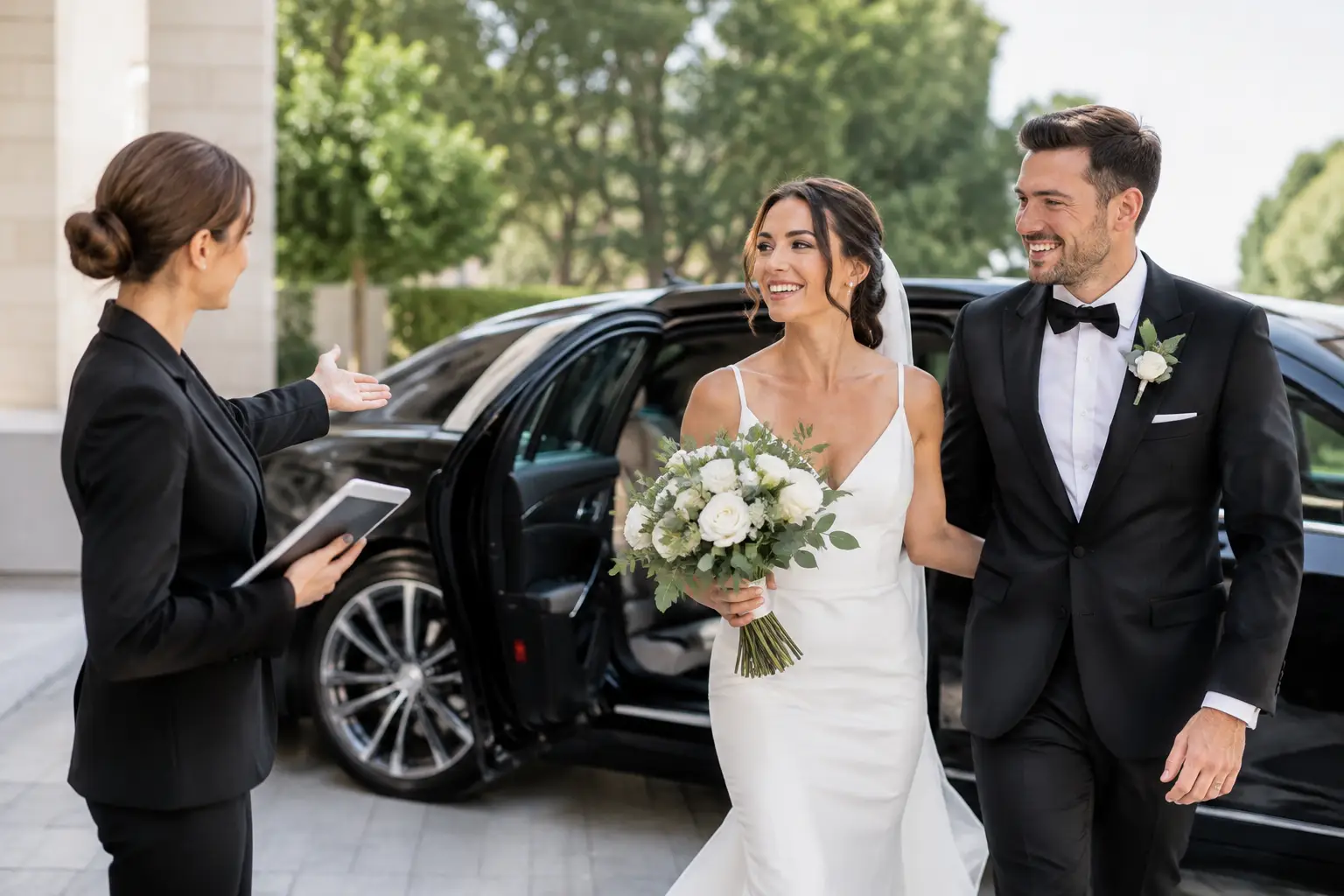
A wedding timeline can look perfect on paper and still fall apart at the curb. One late bridesmaid, an uncle sent to the wrong entrance, or a limo caught behind a downtown Houston event can delay photos, stress the couple, and leave guests wondering where to go. Knowing how to coordinate wedding arrivals means planning the order, timing, vehicles, and communication well before the first guest takes a seat.
The goal is not to have every person arrive at the same minute. It is to make sure the right people arrive at the right place with enough time to settle in, take photos, and handle any last-minute details without rushing.
How to Coordinate Wedding Arrivals From the Ceremony Time Backward
Start with the ceremony start time, then build backward. If the ceremony begins at 5:00 p.m., the groom, wedding party, parents, vendors, and guests should not all be working from a 5:00 p.m. arrival target. Each group needs its own call time based on what has to happen before the ceremony.
Venue access is the first detail to confirm. Ask when the property opens, when the getting-ready suites are available, where vehicles may stage, and whether there are separate entrances for vendors, guests, and the wedding party. A historic venue, hotel ballroom, country club, and private home can each have very different rules.
Build in time for the moments that are easy to underestimate: unloading dresses and personal items, walking from the parking area, finding the correct room, pinning boutonnieres, greeting family, and taking pre-ceremony photos. For a formal wedding, the wedding party commonly needs to arrive 60 to 90 minutes before the ceremony. Immediate family may need 45 to 60 minutes. Guests should generally be asked to arrive 20 to 30 minutes early, especially when parking or security check-in is involved.
In Houston, travel time should account for more than miles. Rush-hour traffic, construction, major sporting events, convention traffic, and sudden weather can all affect a route. Give transportation a realistic buffer rather than assuming the best possible driving conditions.
Create Separate Arrival Plans for Each Group
Trying to use one plan for everyone is where wedding transportation becomes confusing. Divide arrivals into practical groups and give each group a clear instruction. The couple, wedding party, immediate family, VIP guests, and general guests have different needs.
The couple should have the most protected schedule. If the couple is getting ready at separate locations, arrange direct transportation with a pickup window that leaves room for hair, makeup, photos, and any unexpected delay. The couple should not be responsible for navigating, parking, or answering transportation calls on the wedding day.
For the wedding party, decide whether everyone will travel together or meet at the venue. Group transportation is often the better choice when several people are staying at the same hotel, when parking is limited, or when the schedule includes photos at another location. A stretch limousine, luxury SUV, sprinter, or party bus can keep the group together and reduce the chance that someone gets lost or arrives late.
Immediate family may prefer a quieter vehicle and a simpler pickup plan. This is especially helpful for grandparents, parents carrying formal attire, or family members unfamiliar with the area. Confirm who needs assistance entering or exiting the vehicle, and make sure the chauffeur has the correct entrance or drop-off point.
Guests generally need parking and venue directions rather than individual transportation. However, out-of-town guests, older relatives, and guests staying at a hotel may benefit from a scheduled shuttle. If the ceremony and reception are in different locations, guest transportation can also prevent late starts at the reception.
Assign One Person to Manage Transportation Updates
The couple should not be the transportation dispatcher. Select a transportation point person, such as a wedding planner, coordinator, trusted relative, or responsible member of the wedding party. This person should have the full schedule, vehicle details, driver contact information, venue contacts, and a list of passengers for each ride.
Give that person authority to make small decisions. If photos run 15 minutes late, they should be able to adjust a pickup or tell a driver to hold without calling the bride or groom. A professional chauffeur service can coordinate directly with the designated contact, which keeps questions away from the couple during the busiest part of the day.
A simple arrival sheet is helpful. It should include the pickup address, pickup time, passenger names, venue address, designated entrance, and backup phone number. Send it to the people who truly need it, not to every guest. Too many group texts often create more confusion than clarity.
Confirm the Venue’s Vehicle and Parking Rules
A beautiful entrance can become difficult if the venue has a narrow driveway, limited turnaround space, or strict loading-zone rules. Confirm the size of the largest vehicle that can safely access the property. This matters when considering a stretch limousine, shuttle, party bus, or multiple SUVs.
Ask where chauffeurs should wait after drop-off and whether they can return at a specific time for the next transfer. Some venues require commercial vehicles to use a service drive, while others allow only brief curbside stops. If the reception is at a hotel, determine whether the porte cochere can handle several vehicles arriving close together.
For church ceremonies, also ask about weekend traffic patterns and whether another service is ending before your ceremony begins. At private residences, consider neighborhood access, street parking, and whether large vehicles can turn around without blocking guests.
Plan for Airport and Hotel Arrivals Early
Weddings often involve guests flying into George Bush Intercontinental Airport or Hobby Airport, particularly when family is coming from out of state. Do not wait until the wedding weekend to decide how those guests will reach their hotel. Airport delays, baggage claim, and unfamiliar roads can create stress before the celebration even starts.
For VIP guests, parents, grandparents, or anyone arriving on a tight schedule, prearranged airport transportation provides a more dependable first step. Share flight details, hotel information, and the best contact number in advance. A chauffeur who monitors the plan and knows the destination can make the arrival feel organized rather than improvised.
If several guests are staying at one hotel, schedule a wedding-day pickup time and communicate it clearly on the itinerary. State whether the vehicle leaves at the listed time or begins loading then. That small distinction prevents people from appearing five minutes late and expecting the entire group to wait.
Build a Buffer for the Unexpected
No arrival plan can eliminate every surprise. The practical answer is to protect the schedule with buffers at the points where a delay would have the biggest effect. Add extra time before ceremony transportation, between ceremony and reception transfers, and before the couple’s grand entrance.
It also helps to keep a small backup plan in place. Have the coordinator carry a printed timeline, confirm an alternate route to the venue, and identify a rideshare or spare vehicle option for an individual who misses a group departure. The backup should support the primary plan, not replace it.
Weather deserves special attention in the Houston area. If rain is possible, ask the venue about covered drop-off space, umbrellas, and indoor waiting areas. Keep dresses, formal shoes, and elderly guests out of a long walk across wet parking lots whenever possible.
Choose Transportation That Fits the Schedule
The least expensive option is not always the best value when a wedding schedule is at stake. Multiple cars can work well for a small wedding with flexible timing. A larger coordinated vehicle may be the better choice for a wedding party, a hotel-to-venue route, or a group moving between ceremony and reception locations.
When booking, provide the full itinerary instead of only a pickup time. Include the number of passengers, luggage or garment needs, stops, venue restrictions, and whether the vehicle is needed to wait between events. Clear details allow the transportation provider to recommend the appropriate vehicle and assign a chauffeur who understands the schedule.
GM Limousine helps Houston couples coordinate wedding transportation with professional chauffeurs, clean luxury vehicles, and prearranged service built around the day’s timing. Flat-rate planning is especially useful when the schedule includes several stops or multiple arrival groups.
A well-coordinated arrival is not about making the day feel overly controlled. It gives the couple, their families, and their guests room to enjoy a meaningful occasion without watching the clock from the parking lot. Put the plan in place early, choose a reliable point person, and let every important arrival feel calm, courteous, and on time.