 (832) 576-3910
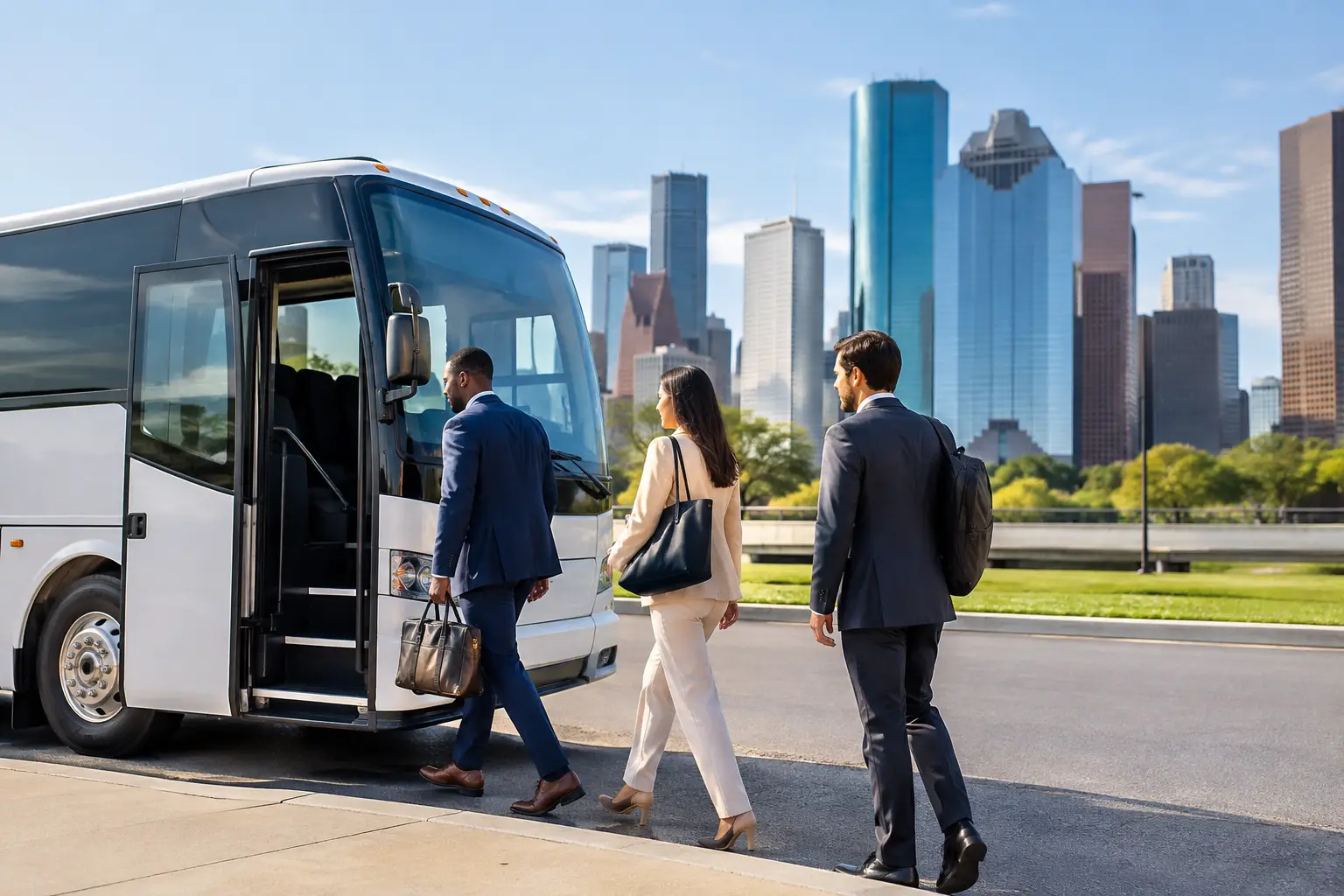
At 8:10 a.m., a keynote is scheduled to begin at a downtown Houston hotel. At the same time, attendees are checking out of two nearby hotels, a group is arriving from IAH, and three executives need a direct ride from Hobby Airport. This is where a conference shuttle logistics example becomes more than a transportation schedule. It becomes the plan that protects the event’s first impression.
For corporate coordinators, the goal is not simply to move people from one address to another. The goal is to get the right guests to the right place, at the right time, without leaving them to guess where to stand, whom to call, or whether their ride is on the way. A well-managed shuttle plan accounts for guest volume, traffic, luggage, flight arrivals, venue access, vehicle type, and the small schedule changes that happen at nearly every conference.
A Conference Shuttle Logistics Example in Houston
Consider a two-day industry conference at a hotel near the George R. Brown Convention Center. The event has 275 attendees. Most are staying at two designated hotels in the Galleria area, while speakers and executive guests are arriving at both George Bush Intercontinental Airport and William P. Hobby Airport. An evening client dinner is planned in River Oaks, followed by return transportation to the host hotel.
The transportation plan starts with three separate service needs: recurring hotel-to-venue shuttles for attendees, individually scheduled airport transfers for VIPs and speakers, and evening group transportation for the client dinner. Treating all three as one generic shuttle route is a common mistake. Each has different timing, vehicle, and service expectations.
For the morning attendee route, transportation is scheduled in waves rather than as one large pickup. The first vehicles depart the hotels early enough for registration staff, exhibitors, and guests who prefer extra time. The next wave is timed for the main arrival period, with a final run reserved for late arrivals and attendees who need accessibility support or have special requests.
The airport schedule is managed separately. Flight numbers, airline details, passenger phone numbers, luggage expectations, and final destinations are confirmed in advance. A professional chauffeur monitors the planned arrival window and provides a clear pickup process, rather than asking a visiting executive to navigate a busy terminal curb on their own.
Start With the Event Schedule, Not the Vehicle List
A transportation plan should be built backward from the moments that cannot move. For a conference, those moments usually include registration opening, the first presentation, meal service, off-site receptions, and airport departure windows. Once these are set, the shuttle provider can calculate pickup times and build in realistic travel allowances.
Houston traffic requires more than a map estimate. A route from the Galleria to downtown can vary substantially depending on the hour, weather, road work, conventions, sporting events, and incidents on major corridors. The same applies to airport transportation. IAH is north of the city and Hobby is southeast, so they should never be treated as interchangeable pickups with the same travel time.
For this example, conference registration begins at 8:30 a.m., and the keynote begins at 9:00 a.m. The first hotel departure is set for 7:20 a.m., followed by departures at 7:40, 8:00, and 8:15. The final run is intentionally small. It covers late-moving guests without forcing the entire attendee group to wait for them.
That buffer has a cost, but it often costs less than a delayed keynote, frustrated guests, or an overwhelmed registration desk. The right amount of buffer depends on the event’s importance, group size, and route complexity. A small executive meeting may only need one vehicle and a flexible chauffeur on standby. A multi-hotel conference needs more structure.
Match Vehicle Capacity to the Actual Passenger Flow
The vehicle decision should reflect passenger movement by time block, not just total attendance. A conference with 275 attendees does not necessarily require transportation for 275 people at once. Some guests may walk from a nearby hotel, use their own vehicles, arrive before the conference begins, or attend only one portion of the program.
Before assigning vehicles, the coordinator should identify expected riders for each segment. In this Houston example, 190 guests need morning hotel shuttles, 24 speakers and executive guests need airport or private transfers, and 110 guests are expected at the evening dinner. Those numbers guide the fleet plan.
Executive sedans and SUVs are appropriate for airport arrivals, speakers, and clients who require direct transportation. Sprinter-style vehicles can work well for smaller groups moving on a fixed schedule. Minibuses or motor coaches are better suited to larger attendee waves. For a formal dinner or celebratory closing event, a stretch limousine or party bus may also fit the occasion, provided it supports the guest count and the venue’s loading rules.
Comfort matters, but operational fit matters first. Sending a luxury SUV for a group with extensive luggage can create delays. Sending one large vehicle for every route may look efficient on paper but can leave guests waiting too long at the hotel. A mixed fleet gives the schedule more control.
Build Clear Pickup Instructions for Guests
Even a perfectly timed vehicle can fail to deliver a good experience if attendees do not know where to go. Every conference guest should receive pickup details that are short, specific, and consistent. Name the hotel entrance or loading area, provide the first and final departure time, and explain what to do if they miss the shuttle.
For airport guests, the instructions should identify the pickup procedure before the flight lands. Meet-and-greet service can be especially valuable for first-time visitors, international travelers, senior executives, or guests arriving with presentation materials. It gives the conference a more polished arrival experience while reducing curbside confusion.
A practical attendee message might state that morning shuttles depart from the main lobby entrance every 20 minutes, that guests should be ready five minutes early, and that the final scheduled departure leaves at 8:15 a.m. It should also include one contact number for transportation questions. Multiple contacts and changing instructions create unnecessary uncertainty.
Use a Dispatch Plan That Can Handle Changes
No conference schedule remains completely fixed. A flight may arrive early, a panel discussion may run late, a rainstorm may slow traffic, or a group may decide to stay longer at a dinner. The answer is not to promise unlimited on-demand vehicles. The answer is to define who can approve changes and how dispatch will communicate them.
For this example, the event coordinator provides one transportation lead with authority to adjust departure times. That person has the chauffeur and dispatcher contact information, passenger manifests for VIP transfers, and the final evening headcount. The transportation provider has vehicle assignments, routes, pickup windows, venue loading instructions, and backup contact details.
GM Limousine can support this type of event plan with professional chauffeurs, clean vehicles, and prearranged transportation across the Greater Houston area. For conference organizers, the value of a reservation-based service is accountability: the route, pickup window, vehicle type, and guest expectations are confirmed before the event begins.
A good dispatch plan also separates urgent issues from routine questions. A guest who cannot find an airport pickup needs immediate assistance. A guest asking about the next hotel shuttle needs accurate schedule information. Keeping those requests organized helps the transportation team respond quickly without disrupting the larger operation.
Plan the Evening Return Before Guests Arrive
The return trip is often the part of conference transportation that receives the least attention. It should not. After a reception or client dinner, guests may leave at different times, weather may change, and some attendees may need to return to another hotel or catch a late flight.
In this example, the evening dinner has two scheduled return waves, with a standby vehicle available for the final group. The first departure is set shortly after the program ends for guests who have early meetings or flights. The second follows after networking concludes. Speakers and VIPs have dedicated transportation so they are not dependent on the group schedule.
This approach is more dependable than announcing that transportation will be available “until late.” Guests need a defined plan. If the event expects flexible departures, that should be planned as a dedicated service with clear limits, not improvised after dinner.
The Details That Protect the Guest Experience
Conference transportation works best when the details are confirmed early: hotel loading locations, venue access restrictions, luggage needs, wheelchair accommodations, flight information, late-night return expectations, and a final passenger estimate. These items may seem minor during planning, but they are often the difference between a calm arrival and a crowded curbside delay.
The strongest conference shuttle plan does not make transportation the center of attention. It lets attendees focus on the meeting, the client, or the event ahead. Give guests clear instructions, give chauffeurs accurate information, and leave enough time for Houston’s real-world traffic conditions. That preparation is what turns a scheduled ride into dependable conference service.